
Green Pool Water? Here’s How to Fix It Fast
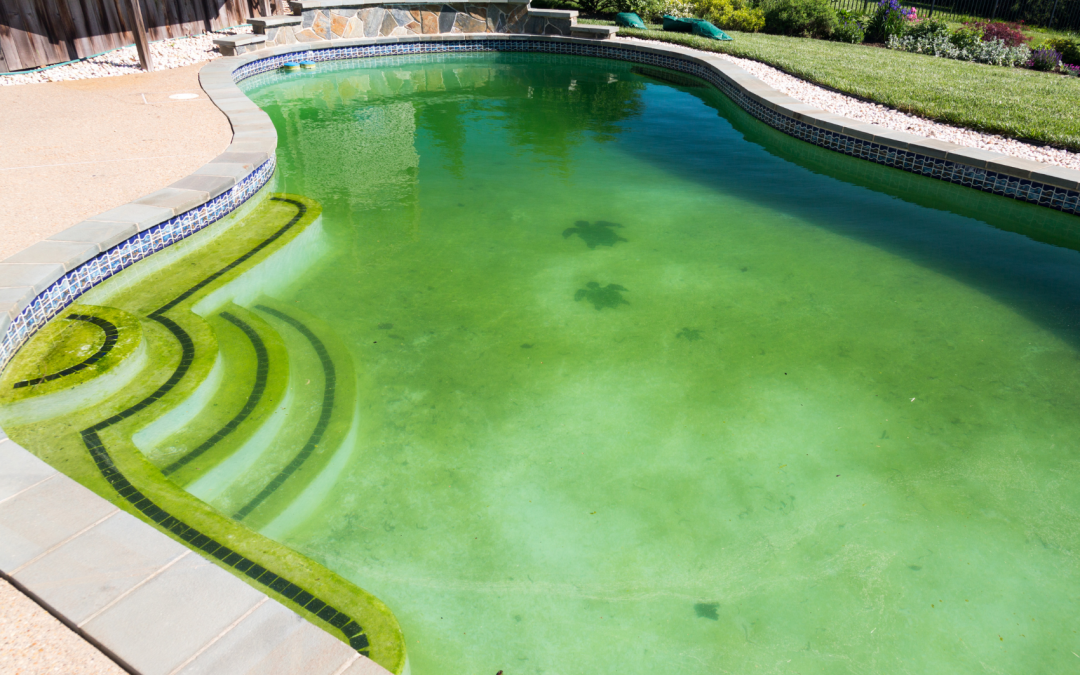
You walk out to your backyard expecting to see sparkling blue water, but instead find a swamp-green pool that looks like it belongs in a horror movie. If you’re staring at green pool water right now, you’re not alone – and more importantly, you’re not stuck with it.
In our 15 years serving pool owners across Springfield, Missouri and surrounding areas, we’ve seen thousands of green pool emergencies. From slightly tinted water that turned green overnight to pools so dark you couldn’t see the bottom, we’ve restored them all. The good news? Most green pool situations are completely fixable, often faster than you think.
By the end of this guide, you’ll know exactly why your pool turned green, how to fix it (whether DIY or professional), and most importantly, how to prevent it from happening again. Let’s dive in.
What Causes Green Pool Water? (Quick Answer)
Green pool water is caused by algae growth, which thrives when chlorine levels drop below 1.0 ppm, pH rises above 7.6, or water circulation is poor. The combination of warm temperatures, sunlight, and chemical imbalances creates perfect conditions for algae to multiply rapidly and turn your pool green.
Detailed Causes of Green Pool Water
Algae Growth: The Main Culprit
When people see green pool water, they’re usually looking at algae – microscopic plants that love warm, sunny conditions. Think of algae as weeds in your pool. Just like weeds take over an untended garden, algae multiply rapidly when conditions are right.
There are two main types you’ll encounter:
- Free-floating algae that turns your entire pool green
- Attached algae that clings to walls and creates slippery surfaces
Last summer, we responded to a customer in Springfield whose crystal-clear pool turned completely green overnight. The culprit? Their pool pump had failed during a three-day heat wave. With no circulation and temperatures hitting 95°F, algae had the perfect breeding ground.
Chemical Imbalance: The Perfect Storm
Your pool’s chemistry is like a delicate ecosystem. When one element goes wrong, everything else follows. Proper chemical balance isn’t just about clear water – it’s about safety. Maintaining levels that meet EPA water quality standards ensures your pool water is safe for swimming while preventing algae growth. Here’s what typically happens:
pH Levels Gone Wrong: When pH climbs above 7.6, chlorine becomes less effective. We’ve tested green pools in the Springfield area with pH levels of 8.2 or higher – at that point, your chlorine is barely working at all.
Chlorine Depletion: This is the big one. Chlorine is your pool’s immune system. When levels drop below 1.0 ppm, algae see an open invitation.
Common causes include:
- Heavy pool usage (especially parties or gatherings)
- Sunlight breaking down chlorine faster than expected
- Organic debris consuming available chlorine
- Faulty chlorination equipment
Alkalinity Issues: This is the factor most pool owners overlook. Total alkalinity acts as a buffer for pH. When alkalinity is off, pH swings wildly, making it nearly impossible to maintain proper chlorine levels.
Circulation and Filtration Problems
Dead water breeds problems. We’ve found that roughly 70% of green pool cases in Missouri involve circulation issues. Your pool needs constant water movement to:
- Distribute chemicals evenly
- Filter out contaminants
- Prevent algae from settling and growing
Common circulation problems we encounter:
- Clogged skimmer baskets (the easiest fix, but often overlooked)
- Dirty filters that can’t trap particles effectively
- Pump problems causing weak water flow
- Blocked return jets creating dead zones
One customer in Republic called us panicking about her “permanently green” pool. The fix? Her pump had been running only 2 hours per day instead of 8-10 hours. Once we corrected the timer, added proper chemicals, and cleaned the clogged filter, her pool was blue again in 36 hours.
Environmental Factors in Springfield and Southwest Missouri
Mother Nature doesn’t always cooperate with pool maintenance, especially in our Missouri climate. Environmental factors that accelerate green pool problems include:
Weather Events: Our summer thunderstorms bring heavy rainfall that dilutes chemicals and introduces contaminants. Missouri storms bring debris, dust, and sometimes even algae spores from neighboring areas.
Organic Debris: Oak pollen in spring, cottonwood seeds in early summer, and falling leaves create constant organic contamination that feeds algae.
Temperature Swings: Missouri’s variable weather – from cool spring mornings to 90°F afternoons – stresses your pool’s chemical balance.
How Long Does It Take to Fix Green Pool Water?
The time to fix green pool water depends on severity:
- Light green water: 24-48 hours with proper treatment
- Dark green water: 3-5 days of intensive treatment
- Black-green water: 1-2 weeks, may require partial draining
- Professional service: Often 50% faster than DIY attempts
Types of Green Pool Water (And What Each Means)
Not all green pools are created equal. The shade and clarity tell us a lot about what’s happening and how to fix it.
Light Green Pool Water
What it looks like: Slightly tinted green water where you can still see the bottom clearly. The water might have a faint green cast, especially in sunlight.
What’s happening: You’re catching an algae bloom early. The algae population is growing but hasn’t exploded yet. This is the easiest stage to treat.
Timeline to fix: 24-48 hours with proper treatment
Recent example: Mrs. Rodriguez in Nixa called us Friday afternoon when she noticed her pool had a green tint. We walked her through shock treatment over the phone, and by Sunday morning, her pool was crystal clear. Early intervention saved her both time and money.
Dark Green Pool Water
What it looks like: Murky green water where you can barely see the bottom. The water has an obvious green color that’s impossible to ignore.
What’s happening: The algae colony is well-established. At this point, you’re dealing with millions of algae cells, and they’re consuming chlorine as fast as you can add it.
Timeline to fix: 3-5 days of intensive treatment
Professional insight: This is where many DIY attempts fail. Pool owners add shock, see no immediate improvement, and give up. The key is persistence and proper chemical levels – something we’ve perfected over thousands of service calls throughout southwest Missouri.
Black-Green Pool Water
What it looks like: Nearly opaque water with a dark, swamp-like appearance. You can’t see more than a few inches into the water.
What’s happening: This is algae bloom at its worst, often combined with other contamination. The algae population is so dense that normal treatment methods may not work.
Timeline to fix: 1-2 weeks of intensive treatment, and in severe cases, partial or complete draining may be necessary.
When to call professionals: If your pool looks like this, strongly consider professional help. The chemical costs alone for proper treatment often exceed the cost of professional service, and there’s a real risk of wasting money on ineffective DIY attempts.
How Much Does It Cost to Fix Green Pool Water?
DIY Treatment Costs:
- Light green pool: $85-135 in chemicals
- Dark green pool: $150-250 in chemicals
- Severe green pool: $250-400+ in chemicals
Professional Treatment Costs:
- Basic green pool service: $250-350
- Severe algae treatment: $350-500
- Emergency same-day service: $400-600
- Includes: All chemicals, labor, equipment use, and follow-up visits

How to Fix Green Pool Water: Step-by-Step Solutions
Step 1: Test Your Water Immediately
Before adding any chemicals, you need to know what you’re dealing with. This is where most people go wrong – they start throwing chemicals at the problem without understanding the root cause.
Essential tests to run:
- Free and total chlorine
- pH levels
- Total alkalinity
- Cyanuric acid (stabilizer)
- Water temperature
Professional testing tip: We always test the water in our lab because pool test strips can be inaccurate, especially in contaminated water. Here’s what we found when we tested Mr. Johnson’s green pool in Springfield last week:
- pH: 8.1 (should be 7.2-7.6)
- Free chlorine: 0.0 ppm (should be 1.0-3.0)
- Total alkalinity: 180 ppm (should be 80-120)
- Cyanuric acid: 85 ppm (should be 30-50)
This told us everything we needed to know: high pH was killing chlorine effectiveness, zero chlorine meant algae had free reign, high alkalinity was making pH adjustments difficult, and excessive stabilizer was further reducing chlorine power.
Step 2: Shock Treatment Process
Shocking your pool means adding a large dose of chlorine to kill algae and oxidize contaminants. But there’s a right way and a wrong way to do it.
How to properly shock a green pool:
- Calculate proper dosage:
- Light green water: 2-3 lbs of shock per 10,000 gallons
- Dark green water: 3-4 lbs of shock per 10,000 gallons
- Black-green water: 4-5 lbs of shock per 10,000 gallons
- Time it right: Always shock at dusk or nighttime. Sunlight breaks down chlorine rapidly, so shocking during the day wastes chemicals and money.
- Safety first – follow CDC guidelines:
- Wear safety goggles and gloves
- Add shock to water, never water to shock
- Keep people and pets away from the pool area
- Ensure good ventilation if using an indoor pool
- Pre-shock preparation:
- Clean skimmer baskets
- Backwash filter if needed
- Ensure pump is running
- pH adjustment: Get pH to 7.2-7.4 before shocking (crucial for chlorine effectiveness)
- Apply shock: Dissolve shock in a bucket of water, then pour around pool perimeter while pump runs
- Maintain circulation: Run pump continuously for 24-48 hours
- Brush thoroughly: This breaks up algae colonies and helps chlorine work more effectively
Step 3: Remove Dead Algae
Killing algae is only half the battle – you also need to remove the dead algae from your pool.
Manual removal strategy:
- Brush first, vacuum second: We always brush the entire pool before vacuuming. This loosens algae from surfaces and suspends it in the water where chemicals can work.
- Vacuum to waste: If possible, vacuum directly to waste rather than through your filter. This prevents dead algae from clogging your filtration system.
- Multiple sessions: Plan on brushing and vacuuming daily during treatment.
Algaecide application: While shock treatment kills algae, algaecide prevents it from coming back. We recommend adding algaecide after shock treatment has cleared the water.
Professional tip: We always brush before adding chemicals because algae can form a protective biofilm on surfaces. Brushing breaks this film and allows chemicals to work more effectively. It’s a simple step that dramatically improves treatment success.
Step 4: Balance Your Pool Chemistry
Once you’ve killed the algae, proper chemical balance prevents it from returning.
Chemical balancing order:
- pH adjustment first: Use pH decreaser (sodium bisulfate) to lower pH or pH increaser (sodium carbonate) to raise it
- Alkalinity correction: If total alkalinity is off, adjust it before fine-tuning pH
- Sanitizer maintenance: Maintain free chlorine at 1.0-3.0 ppm
Testing schedule during treatment:
- Day 1-3: Test twice daily
- Day 4-7: Test daily
- Ongoing: Test 2-3 times per week
Step 5: Optimize Circulation and Filtration
Your pool equipment is working overtime during algae treatment, so optimization is crucial.
Equipment optimization checklist:
- Run your pump 24/7 during treatment
- Clean or backwash your filter daily during treatment
- Check that all return jets are pointing down and away from skimmers
- Ensure proper water flow throughout the pool
When Should I Call a Pool Service Company?
Call immediately if:
- Your pool has been green for more than a week
- You’ve attempted DIY treatment without success
- You’re hosting an event and need guaranteed results
- Your pool has an unusual color (black, yellow, or red tint)
- You smell strong chemical odors or see equipment damage
DIY vs. Professional Success Rates:
- Professional treatment success rate: 95%+ on first attempt
- DIY treatment success rate: 60-70% on first attempt
- Average time savings with professional service: 3-5 days

Prevention: Never Deal with Green Pool Water Again
Weekly Pool Maintenance Schedule
Daily tasks (30 seconds):
- Check skimmer baskets and empty if needed
- Visually inspect water clarity and color
- Ensure pump is running properly
Weekly tasks (30 minutes):
- Test and adjust water chemistry
- Brush walls and tile line
- Vacuum pool floor
- Clean out pump basket
- Check and clean automatic pool cleaner
Monthly tasks (1-2 hours):
- Deep clean filter (backwash or rinse cartridges)
- Inspect and clean salt cell (if applicable)
- Check pool equipment for wear or damage
- Trim vegetation around pool area
- Shock pool as preventive measure
Seasonal Considerations
Spring (March-May):
- Heavy pollen season requires extra skimming
- Temperature fluctuations stress chemical balance
- Equipment inspection after winter
- Increased testing frequency during startup
Summer (June-August):
- Daily chemical testing during heat waves
- Post-storm chemical adjustment
- Heavy usage requires extra shock treatments
- Monitor for equipment overheating
Fall (September-November):
- Leaf management critical for chemical balance
- Prepare for winter closing
- Equipment winterization
- Reduced chemical demand as temperatures drop
Winter (December-February):
- Monthly chemical checks even when closed
- Monitor cover condition
- Equipment protection from freezing
- Prepare for spring startup
Pool Service: Professional Green Pool Treatment
Our Green Pool Recovery Process
When you call Accurate Pool and Landscape for green pool service in Springfield, Missouri, here’s exactly what happens:
Same-day assessment: We test your water, inspect your equipment, and identify the root cause of the problem. This isn’t just about treating symptoms – we fix the underlying issue.
Customized treatment plan: Based on your pool’s specific situation, we create a treatment plan with realistic timelines and cost estimates.
Professional execution: We handle all chemical additions, equipment adjustments, and follow-up care. You don’t have to worry about calculations, safety, or multiple trips to the pool store.
Guaranteed results: We return to retest your water and make adjustments as needed. The job isn’t finished until your pool is crystal clear and properly balanced.
Why Choose Professional Pool Service Near Me?
Local expertise: We understand Missouri’s unique climate challenges, from spring pollen to summer storms to winter freezes.
Emergency availability: Green pool problems don’t wait for business hours. We offer emergency service throughout Springfield and surrounding areas.
Equipment and safety: Professional-grade chemicals and equipment, plus full insurance coverage for your protection.
Customer testimonial: “We tried fixing our green pool ourselves for two weeks and only made it worse. Accurate Pool had it blue again in three days, and they showed us how to prevent it from happening again. Worth every penny.” – Sarah M., Springfield homeowner
Frequently Asked Questions About Green Pool Water
Why did my pool turn green overnight?
Pool water can turn green overnight when chlorine levels drop to zero and algae multiply rapidly. Common causes include pump failure, chemical depletion, or heavy organic contamination from storms.
Is it safe to swim in green pool water?
No, never swim in green pool water. Green pools can harbor harmful bacteria, parasites, and have unbalanced chemistry that can cause skin and eye irritation.
Can I prevent green pool water?
Yes, green pool water is completely preventable with proper chemical maintenance, adequate circulation, and regular cleaning. Weekly testing and monthly professional service significantly reduce green pool risk.
What’s the difference between algae and bacteria in pools?
Algae are plants that make water green, while bacteria can cause illness. Both thrive in poorly maintained pools, but algae are visible while dangerous bacteria are not.
How do I know if my green pool treatment is working?
You should see improvement within 24-48 hours of proper treatment. The water will gradually clear from dark green to light green to cloudy to crystal clear.
Should I drain my green pool?
Draining is rarely necessary and should be a last resort. Most green pools can be restored with proper chemical treatment, saving thousands of gallons of water and hundreds of dollars.
Advanced Green Pool Water Solutions
Swimming Pool Algae Treatment Options
Chlorine-based treatments:
- Liquid chlorine (sodium hypochlorite)
- Granular chlorine (calcium hypochlorite)
- Chlorine gas (commercial pools only)
Alternative sanitizers:
- Salt water chlorine generators
- UV sterilization systems
- Ozone treatment systems
Algaecide types:
- Copper-based algaecides (most common)
- Polyquat algaecides (gentle, non-staining)
- Silver algaecides (premium option)
Pool Equipment Troubleshooting for Green Water Prevention
Pump problems that cause green pools:
- Insufficient runtime (should run 8-12 hours daily)
- Clogged impeller reducing flow
- Air leaks causing poor circulation
- Undersized pump for pool volume
Filter issues:
- Cartridge filters: Replace every 2-3 months
- Sand filters: Backwash weekly, replace sand every 3-5 years
- DE filters: Add fresh DE after backwashing
Chemical feeder problems:
- Salt cells: Clean every 3 months, replace every 3-5 years
- Chlorinators: Check tablets weekly, clean monthly
- Automatic feeders: Calibrate quarterly
Emergency Green Pool Water Service
When to Call for Same-Day Service
Emergency situations:
- Pool party or event in 24-48 hours
- Severe algae bloom covering entire pool surface
- Equipment failure causing rapid water quality decline
- Health department inspection or HOA violation notice
What to expect from emergency service:
- Rapid response within 2-4 hours
- Aggressive treatment protocol
- Multiple service visits included
- Priority scheduling for follow-up
Green Pool Water Safety Concerns
Health risks:
- E. coli and other harmful bacteria
- Parasites like Giardia and Cryptosporidium
- Skin and eye irritation from chemical imbalances
- Slip hazards from algae-coated surfaces
Property protection:
- Algae stains on pool surfaces
- Equipment damage from chemical imbalances
- Structural damage from neglected water chemistry
- Decreased property value from poor pool condition
Conclusion: Get Your Springfield Pool Crystal Clear Again
Green pool water is frustrating, but it’s completely fixable with the right approach. Whether you choose DIY treatment or professional service, the key is acting quickly and using proven methods.
If you’re dealing with green pool water right now:
- Test your water immediately (or call us for professional testing)
- Assess the severity using our guide above
- Follow our step-by-step treatment process or call for professional help
- Be patient – even professional treatment takes time to work
For long-term prevention:
- Maintain consistent water chemistry
- Keep your circulation system running properly
- Clean your pool regularly
- Don’t skip maintenance, even when the pool looks fine
Remember: Every day you wait to treat green pool water, the problem gets worse and more expensive to fix. We’ve seen pools that could have been fixed in 2 days take 2 weeks because the owner waited to start treatment.
Ready to Get Your Springfield Pool Back to Blue?
At Accurate Pool and Landscape, we’ve restored thousands of green pools throughout Springfield, Nixa, Ozark, Republic, and surrounding Missouri communities over the past 15 years. Whether you need emergency green pool treatment, regular maintenance to prevent problems, or just want professional advice on DIY treatment, we’re here to help.
Contact us today for:
- Emergency green pool treatment (same-day service available)
- Free water testing and treatment consultation
- Weekly maintenance packages that prevent green pool problems
- Equipment repair and optimization
- Seasonal pool opening and closing services
Don’t let green pool water ruin your swimming season. Call Accurate Pool and Landscape or visit us at accuratepoolandlandscape.com for fast, professional pool service you can trust throughout southwest Missouri.
Your pool can be crystal clear again – let us show you how.